Material Handler Jobs in Canada with Visa Sponsorship 2026
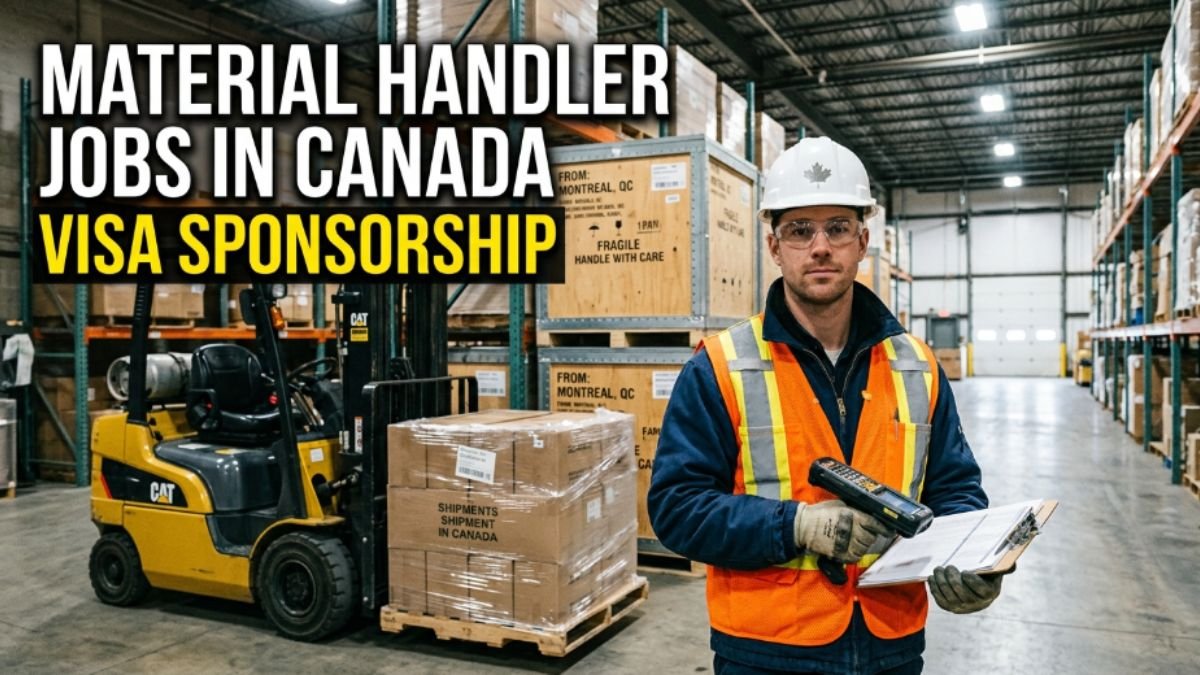
Canada’s warehouses, factories, and distribution centers are actively hiring material handlers, and many employers are open to sponsoring qualified foreign workers. This role is one of the most accessible entry points into the Canadian job market for people without a college degree or specialized training. If you are looking for stable, hands-on work with a clear visa pathway, this guide covers everything you need to know.
What Does a Material Handler Do
A material handler is responsible for moving, storing, and organizing goods within a warehouse, factory, or distribution center. This job keeps supply chains running and supports daily operations in manufacturing and logistics companies across Canada.

Typical duties include:
- Loading and unloading products and materials by hand or with basic equipment
- Operating pallet jacks, hand trucks, and sometimes forklifts
- Counting, weighing, sorting, packing, and unpacking goods
- Storing materials safely and keeping inventory records accurate
- Reporting damaged goods or mechanical issues to supervisors
- Keeping the workspace clean, organized, and safe
- Following workplace safety rules while handling equipment and materials
The job is physically active. Workers are usually required to lift and carry items weighing up to 50 pounds (around 23 kilograms) on a regular basis.
Who Can Apply
This position is open to people with little or no prior work experience, which makes it a practical choice for unskilled and less-skilled job seekers. Most employers look for the following:
- A high school diploma or equivalent education
- The physical ability to lift, carry, and stand for extended periods
- Basic English or French communication skills
- A good attitude and willingness to work as part of a team
- Attention to detail and time management skills
- Prior experience in warehouse or material handling work is helpful but not always required
- A forklift certification or basic safety training can improve your chances but is not always mandatory
Because many roles are described as “will train,” candidates who show reliability and a strong work ethic are often preferred over those with formal qualifications alone.

Salary Expectations
Pay for material handlers in Canada varies by province, employer, and shift type. Based on current job postings and wage data, here is a general breakdown.
| Category | Amount (CAD) |
|---|---|
| Average annual salary | $36,947 per year |
| Average hourly wage | Around $18.95 per hour |
| Typical hourly range | $17.60 to $25 per hour |
| Annual salary range | $35,000 to $60,000 per year |
| Night shift premium | Often an additional $2.00 per hour |
Wages tend to be higher in provinces with a higher cost of living or a stronger demand for warehouse labor, such as Ontario and British Columbia. Overtime pay, shift premiums, and benefits like dental care, vision care, and paid time off are commonly included with full-time positions.
How Visa Sponsorship Works
Canadian employers sponsor foreign material handlers through two main government programs.
Temporary Foreign Worker Program (TFWP): Most material handler positions fall under this program. The employer must first obtain a positive Labour Market Impact Assessment (LMIA), which proves that no Canadian citizen or permanent resident was available to fill the role. Once the LMIA is approved, the worker can apply for a work permit.
International Mobility Program (IMP): Some positions are exempt from the LMIA requirement, particularly if they fall under specific trade agreements or intra-company arrangements. These cases are less common for material handler roles but do exist.
The general process looks like this:
- Secure a genuine job offer from a Canadian employer
- The employer applies for and receives a positive LMIA (if required)
- You apply for a temporary work permit through Immigration, Refugees and Citizenship Canada (IRCC)
- You attend any required medical examination with an approved panel physician
- You provide proof of good character, which may include a police clearance certificate
- Once your work permit is approved, you prepare for travel and relocation to Canada
Some material handlers who gain Canadian work experience later become eligible for permanent residency through programs such as the Provincial Nominee Program (PNP), depending on the province and its specific requirements.
Documents You Will Likely Need
Before applying, gather the following documents to avoid delays:
- A valid passport with at least six months of validity remaining
- A signed job offer letter from the Canadian employer
- A written employment contract outlining pay, hours, and job conditions
- Proof of education, such as a high school certificate
- Any forklift or warehouse safety training certificates you hold
- A resume highlighting relevant experience, if available
- Police clearance certificate from your home country
- Medical examination results from an approved physician
Where to Find Genuine Job Openings
Reliable ways to find verified material handler positions with visa sponsorship include:
- Canada’s official Job Bank, which lists LMIA-approved job postings
- Company career pages of Canadian manufacturers, logistics firms, and distribution centers
- Licensed recruitment agencies that specialize in Canadian work permits
- Direct applications to warehouses and factories known to hire foreign workers
Always confirm that a job posting is genuine before paying any fees. Legitimate Canadian employers do not usually charge job seekers for visa sponsorship, and recruitment fraud targeting foreign workers is a real risk that requires caution.
Why Consider This Job
Material handler roles offer a realistic and achievable path to working legally in Canada without needing a university degree or years of specialized training. The combination of steady pay, on-the-job training, safety benefits, and the possibility of long-term residency makes this an attractive option for workers seeking stability abroad.
With consistent demand across manufacturing, warehousing, and logistics sectors, this job category remains one of the more approachable routes into the Canadian labor market for international applicants.
Before applying, take time to verify the employer’s legitimacy, read your job offer carefully, and confirm the LMIA status if one is required. Doing this groundwork protects you from scams and puts you on solid footing for a smooth transition into your new job and life in Canada.