Greenhouse Tomato Picking Jobs in Netherlands with Visa Sponsorship in 2026
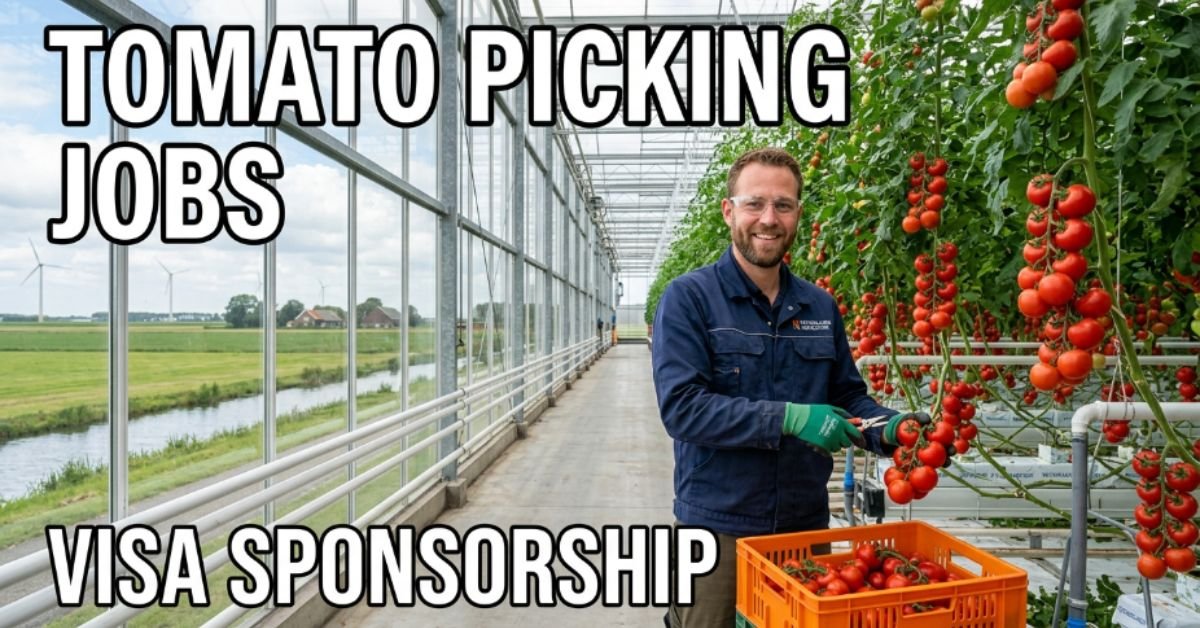
Greenhouse tomato picking jobs are part of the Netherlands’ agriculture and horticulture sector. These jobs can suit people who do not have higher education or advanced professional skills.
Typical work can involve picking ripe tomatoes, sorting produce, packing vegetables, keeping work areas clean, and following instructions from supervisors.

For workers from outside the European Union (EU), European Economic Area (EEA), or Switzerland, legal permission to work is required in most cases.
The employer normally has to arrange the appropriate work permit. For seasonal work in agriculture and horticulture, the Dutch Employee Insurance Agency (UWV) has specific rules for hiring workers from outside Europe.
What Does a Greenhouse Tomato Picker Do?
A greenhouse tomato picker works inside controlled growing areas where tomatoes are grown and harvested. The exact duties depend on the employer and the job contract.
Common duties may include:

- Picking tomatoes when they are ready for harvest
- Sorting tomatoes according to quality or size
- Placing harvested tomatoes into containers
- Packing vegetables for transport
- Removing damaged or unsuitable produce
- Keeping tools and work areas clean
- Following workplace health and safety instructions
- Working according to instructions from a supervisor
The work is generally practical rather than office-based. Workers need to follow instructions carefully and perform repetitive tasks safely.
Who Can Apply for These Jobs?
Greenhouse tomato picking can be relevant to people with limited formal education because the work is based mainly on practical duties. However, each employer decides its own hiring requirements.
For seasonal agricultural and horticultural work under the relevant UWV route, the worker must be at least 18 years old. The employer must also meet specific conditions, including arranging clean and safe accommodation and complying with employment conditions.
Previous greenhouse or farm experience can be useful when an employer asks for it, but applicants should always check the individual vacancy instead of assuming that experience is mandatory.
Visa Sponsorship and Work Permit Rules
“Visa sponsorship” for this type of job should not be confused with a simple promise of employment. A worker from outside the EU/EEA or Switzerland normally needs legal permission to work in the Netherlands.
For seasonal agriculture and horticulture jobs, the employer must first try to find a suitable worker within the EU/EEA or Switzerland. UWV states that the employer must make this search for at least three months before applying for a seasonal worker from outside these areas. The vacancy must also be reported through the required employment channels.
For seasonal work lasting no more than 90 days, the employer applies for a TWV work permit. When the worker will work for longer than 90 days, a GVVA, which combines residence and work permission, is generally required. The exact permit depends on the worker’s situation and length of stay.
This means applicants should look specifically for employers or agencies that clearly state that they can support the required work-permit process.
Seasonal Work Permit Conditions
The Dutch rules for seasonal agricultural and horticultural workers include several important conditions. According to UWV, the seasonal worker must work in agriculture or horticulture, be at least 18 years old, and receive clean and safe accommodation arranged by the employer. The employer must also follow the applicable employment conditions.
The seasonal work permit can be valid for a maximum of 24 weeks under this route.
Applicants should therefore read the contract carefully before accepting a position. The contract should identify the employer, job, workplace, working hours, gross salary, contract period, and start and end dates.
Salary for Greenhouse Workers
The legal minimum wage in the Netherlands is paid by the hour. From 1 July, the statutory minimum hourly wage for workers aged 21 and older is €14.99 before tax. Different minimum rates apply to younger workers.
Actual pay for a greenhouse tomato picker can depend on the employment contract, applicable collective labour agreement, age, working hours, and other lawful employment conditions. Applicants should not rely on a salary figure unless it appears in the job advertisement or employment contract.
Holiday allowance is separate from the statutory minimum wage and is not included when checking whether the minimum wage requirement has been met.
| Job factor | Important information |
|---|---|
| Work sector | Agriculture and horticulture |
| Typical work | Tomato picking, sorting and packing |
| Minimum age for seasonal route | 18 |
| Seasonal permit validity | Up to 24 weeks |
| Work up to 90 days | TWV may apply |
| Work over 90 days | GVVA may apply |
| Minimum hourly wage, age 21+ | €14.99 before tax from 1 July |
| Accommodation | Clean and safe accommodation required under seasonal route |
Skills Needed for Tomato Picking Work
These jobs are often practical and do not necessarily require advanced qualifications. Employers may focus on whether an applicant can safely perform the required duties and follow workplace instructions.
Useful qualities include:
- Physical ability to perform repetitive work
- Care when handling fresh produce
- Ability to follow instructions
- Reliability and punctuality
- Basic workplace communication
- Willingness to work in a greenhouse environment
- Ability to work as part of a team
Do not add qualifications to your CV that you do not have. If an employer asks for previous agricultural experience, provide accurate details about your past work.
How to Find Legitimate Greenhouse Jobs
Job seekers should check vacancies carefully before sending personal documents or paying any recruitment fee.
A practical application process is:
- Search for tomato picker, greenhouse worker, horticulture worker, harvest worker, or agricultural worker vacancies.
- Check whether the employer accepts applicants from outside the EU/EEA.
- Read the visa or work-permit information carefully.
- Check the employer’s name and contact details.
- Review salary, working hours, accommodation, contract length, and job location.
- Ask which work permit the employer will apply for.
- Do not travel to work before the required permission has been obtained.
Workers from outside Europe should remember that the employer generally has an important role in arranging the required work permission.
Protect Yourself From Fake Job Offers
Visa-sponsored agricultural jobs can attract dishonest recruiters. A genuine vacancy should provide clear information about the employer, position, contract, salary, and work-permit process.
Be careful if someone:
- Guarantees a Dutch visa without checking your eligibility
- Refuses to provide a written job offer
- Requests money for a job without clear documentation
- Uses only social media messages and provides no verifiable employer details
- Asks you to work before receiving legal permission
Do not send your passport or other sensitive documents to an unknown person without first checking who they are and why the documents are required.
Final Thoughts
Greenhouse tomato picking is a practical agricultural job that may be suitable for workers without advanced qualifications. For non-EU/EEA and non-Swiss applicants, however, getting the job is only one part of the process. The employer must meet Dutch work-permit requirements, and the correct permission must be obtained before the worker starts employment.
The seasonal agriculture and horticulture route has specific rules covering recruitment, age, accommodation, employment conditions, and permit duration. Checking these requirements through official Dutch sources before accepting an offer is essential.
For job seekers, the safest approach is simple: apply to genuine vacancies, read the employment contract carefully, confirm the work-permit arrangement, and never assume that every greenhouse job includes visa sponsorship.