Fruit Picker Jobs in New Zealand with Visa Sponsorship in 2026
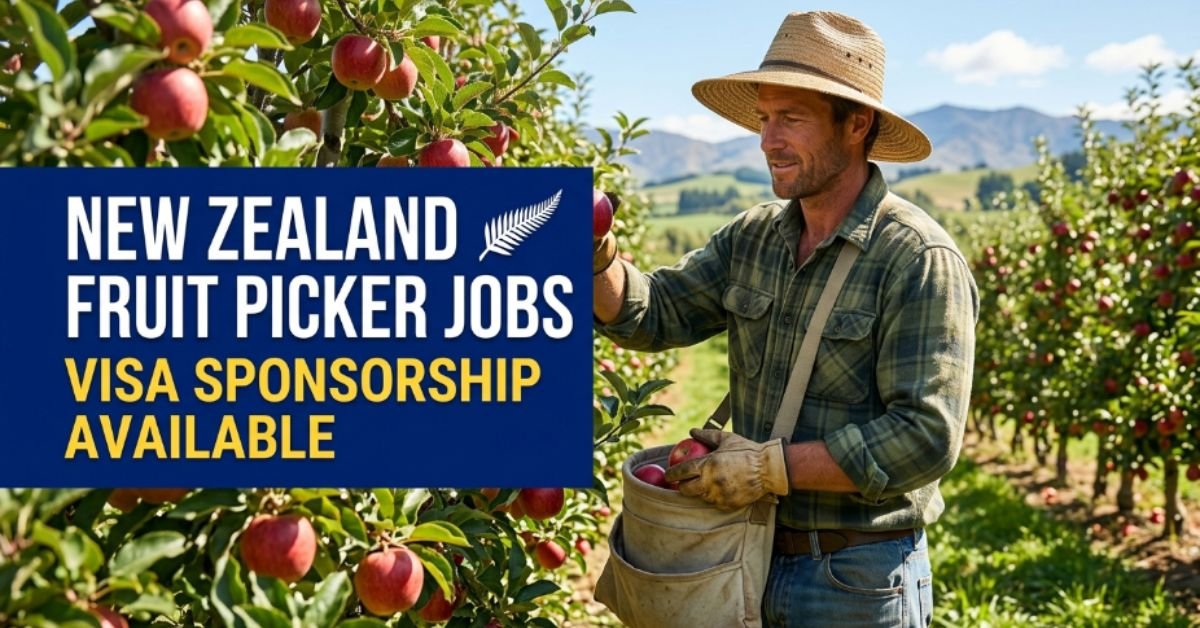
Fruit picker jobs in New Zealand are seasonal jobs in orchards, farms, and horticulture businesses. The work can include picking fruit, packing crops, maintaining plants, pruning, thinning, and other basic farm tasks. These jobs can suit people who do not have university qualifications or advanced professional skills.
New Zealand has official seasonal work schemes that allow approved employers to recruit workers from overseas. However, visa sponsorship is not available for every fruit picker vacancy, and applicants must meet the requirements of the specific work visa.

What Does a Fruit Picker Do?
A fruit picker helps farmers and orchard businesses collect crops when they are ready for harvest. The exact duties depend on the crop and employer.
Common duties can include:
- Picking ripe fruit carefully
- Sorting and handling harvested fruit
- Packing fruit into boxes or containers
- Carrying or moving harvested crops
- Maintaining plants and growing areas
- Removing unwanted leaves or plant material
- Following workplace health and safety rules
- Working as part of a farm or orchard team
New Zealand’s Work and Income service confirms that seasonal horticulture work includes fruit and vegetable picking, packing, processing, pruning, and other farm activities.
Fruit picking is physical work. Workers may spend long periods standing, walking, bending, reaching, and working outdoors. Employers may also require workers to follow daily production and quality requirements.

Where Fruit Picker Jobs Are Available
Seasonal fruit work is available in different parts of New Zealand, depending on the crop and time of year. Work and Income provides a seasonal calendar showing the crops and regions where picking and other horticulture jobs are available.
Examples include:
| Region | Examples of seasonal fruit work |
|---|---|
| Gisborne | Apples and pears |
| Hawke’s Bay | Apples, pears and summerfruit |
| Tasman | Apples, pears and summerfruit |
| Nelson | Apples and pears |
| Central Otago | Apples and summerfruit |
| Queenstown-Lakes | Summerfruit |
| Northland | Avocados and berries |
The availability of work changes throughout the year. Job seekers should check current vacancies instead of relying only on a general seasonal calendar.
Visa Sponsorship for Fruit Picker Jobs
The main official route for overseas seasonal workers in New Zealand horticulture is the Recognised Seasonal Employer (RSE) scheme.
Under the RSE scheme, approved horticulture and viticulture employers can recruit overseas workers when they need additional seasonal labour. Workers can perform jobs such as planting, crop maintenance, harvesting, and packing.
An important point for international applicants is that the RSE scheme is not an unrestricted visa route for workers from every country. Normally, RSE employers recruit workers from eligible Pacific countries. Immigration New Zealand also allows recruitment from other countries in certain circumstances, including where the employer has an established relationship with workers of other nationalities or has been unable to recruit suitable workers from eligible Pacific countries.
This means a person should not assume that any fruit picking advertisement offering “visa sponsorship” is available to applicants from every country.
RSE Limited Visa Requirements
A worker applying through the RSE route needs a job offer from a New Zealand Recognised Seasonal Employer. Immigration New Zealand provides an official list of recognised seasonal employers that can be checked before applying.
The employer must support the worker’s visa application and provide the required employment information.
The employer-supported process generally includes:
- The approved employer offers the worker a seasonal job.
- The employer provides the required written employment agreement.
- The worker applies for the RSE Limited Visa with the required evidence.
- Immigration New Zealand assesses the application.
- After the visa is granted, the worker can travel to New Zealand and begin the approved employment.
The RSE Limited Visa normally allows a worker to stay for a maximum of seven months in an 11-month period. Workers from Kiribati and Tuvalu can stay for up to nine months in an 11-month period under the stated RSE rules.
Workers are restricted to the Recognised Seasonal Employer named on their visa.
Pay and Working Conditions
Seasonal workers in New Zealand must be employed under New Zealand employment law. Under the RSE scheme, the employer must provide a written employment agreement and comply with employment requirements.
Pay can depend on the employer, job, hours, and payment method. Work and Income states that some seasonal workers are paid by the hour, while other jobs may use a contract rate. For example, an apple picker may be paid according to the amount picked.
Applicants should carefully read the employment agreement before accepting a job. Check the hourly or contract rate, working hours, deductions, accommodation arrangements if provided, and other conditions stated by the employer.
Other Seasonal Work Visas
New Zealand also has seasonal work visas under the Accredited Employer Work Visa framework. These include the Global Workforce Seasonal Visa and Peak Seasonal Visa. However, these visas are based on specific occupations included on the relevant seasonal job lists.
The Global Workforce Seasonal Visa requires an offer of full-time seasonal work from an accredited employer and a job listed for that visa. It can allow eligible workers to work for up to nine months each year.
The Peak Seasonal Visa can allow eligible workers to work for up to seven months, but applicants must have a job on the relevant Peak Seasonal Visa job list.
Current official seasonal occupation information does not list a general “fruit picker” occupation among the GWSV or PSV occupations. Therefore, applicants should not treat these visas as a general fruit-picking visa.
How to Find Genuine Fruit Picking Jobs
People looking for overseas fruit picking work should start with official sources and recognised employers.
Useful steps include:
- Check New Zealand’s Recognised Seasonal Employer list.
- Search current seasonal vacancies.
- Confirm that the employer is approved for the relevant visa route.
- Read the complete job description.
- Check whether the employer can legally support your visa.
- Review the written employment agreement before accepting the job.
- Check all visa requirements on Immigration New Zealand’s official website.
- Avoid anyone asking for money in exchange for a guaranteed New Zealand work visa.
Immigration New Zealand maintains an official list of Recognised Seasonal Employers, while Work and Income provides information about seasonal jobs and crop availability.
Who Can Apply for Fruit Picker Work?
Fruit picker jobs may be suitable for people with limited formal education because the work is generally based on practical tasks rather than university-level qualifications. Previous farm or horticulture experience can be useful, but the requirements depend on the individual employer and visa route.
Applicants should be prepared for physical outdoor work and should carefully check the requirements of each vacancy.
The most important issue for overseas applicants is not simply finding a fruit picker job. The job must also be connected to a legal immigration pathway that the applicant can use.
Final Words
Fruit picker jobs are an important part of New Zealand’s seasonal horticulture workforce. Picking, packing, harvesting, pruning, and crop maintenance jobs can provide opportunities for people seeking practical seasonal employment.
For overseas workers, the Recognised Seasonal Employer scheme is the key official route for eligible seasonal horticulture workers. However, eligibility depends on the worker’s nationality, employer, job offer, and visa requirements. Applicants should verify the employer and visa pathway through official New Zealand government sources before paying any fees or making travel arrangements.
The safest approach is to find a genuine approved employer, receive a valid job offer, understand the employment agreement, and apply through the correct immigration process.
