Agriculture Jobs in Luxembourg with Visa Sponsorship
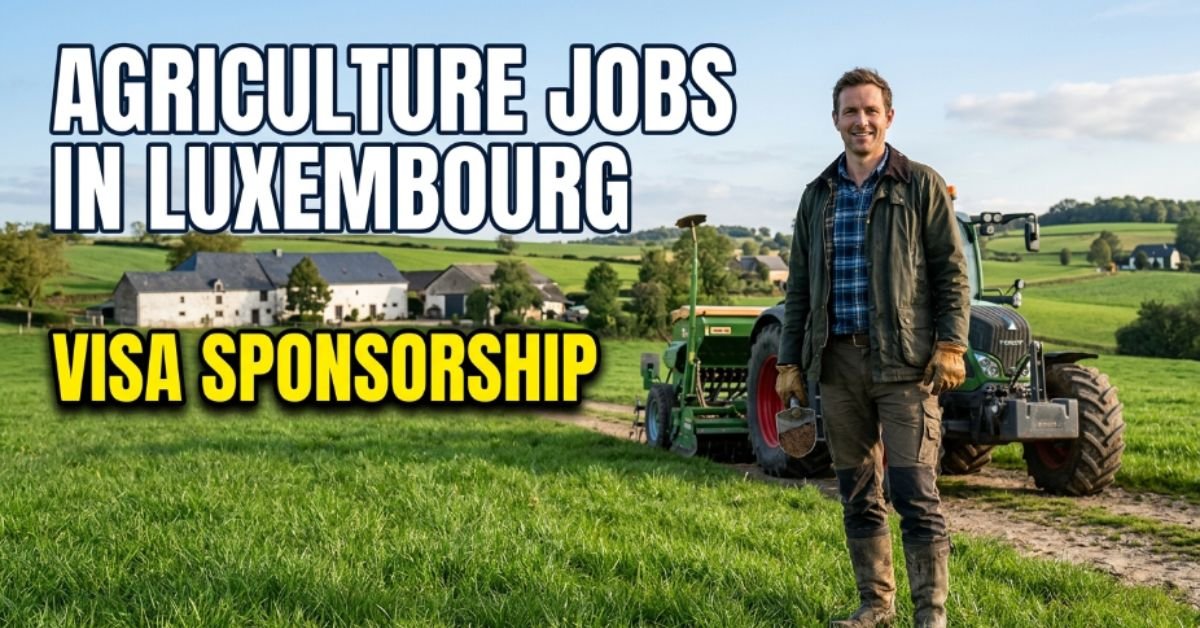
Agriculture jobs in Luxembourg can include farm work, livestock work, crop production, horticulture, viticulture, fruit and vegetable work, and other practical roles. These jobs can suit people who do not have advanced qualifications, especially when an employer is looking for workers for hands-on agricultural duties.
Luxembourg’s agriculture sector includes farming, livestock, vineyards, horticulture, nurseries, market gardening and related activities.

For workers from outside the European Union, getting an agricultural job is different from simply finding a vacancy. A third-country national generally needs the correct authorisation to live and work in Luxembourg before starting employment.
An employer can support the immigration process by completing the required hiring procedures, but visa sponsorship is not automatic for every agricultural vacancy.
Types of Agriculture Jobs Available
Agricultural work covers several areas, so job duties depend on the farm or agricultural business. ADEM and Luxembourg’s agricultural authorities have highlighted different agricultural occupations, including agricultural workers, stable workers, horse keepers, pickers, fence workers, mechanics and vineyard workers.
For people seeking less-skilled work, possible job titles to look for include:

- Farm worker
- Agricultural worker
- Crop worker
- Fruit picker
- Vegetable worker
- Vineyard worker
- Horticulture worker
- Stable worker
- Livestock worker
- General farm assistant
Not every vacancy will be suitable for a person without experience. Some employers may ask for previous farm work, physical ability, specific practical skills or other requirements listed in the job advertisement.
What Agricultural Workers Do
Agricultural duties depend on the type of farm and the season. General farm work can involve practical tasks connected with crops, animals, gardens, vineyards or other agricultural activities.
Common duties may include helping with crop production, caring for livestock, harvesting, picking, maintaining agricultural areas and assisting experienced workers. Vineyard, horticulture and fruit and vegetable businesses can have different work requirements.
Luxembourg has a strong livestock sector. Its agricultural production is mainly oriented toward cattle farming, while other activities include pigs, poultry, sheep, horses and dairy production. Crops include cereals, potatoes, oilseed rape and animal-feed crops, while vineyards are concentrated along the Moselle.
Requirements for Agriculture Jobs
The requirements are different for each vacancy. Less-skilled agricultural positions may not require a university degree, but workers still need to meet the employer’s conditions.
A suitable applicant should carefully check whether the vacancy requires:
- Previous agricultural experience
- Physical fitness for manual work
- Ability to work outdoors
- Ability to follow safety instructions
- Basic communication skills
- Experience with animals, crops or farm equipment
- A driving licence, if specifically required
- Any language ability mentioned by the employer
Do not claim qualifications or experience that you do not have. A simple CV should clearly explain your previous jobs, practical skills and agricultural experience, if any.
Visa Sponsorship and Work Permit Process
For a worker from a non-EU country, an employer must follow Luxembourg’s rules before hiring the worker. ADEM states that an employer wishing to hire a third-country national generally needs an ADEM certificate allowing the employer to hire that person. The employer must first declare the vacant position to ADEM.
If the position is not on the shortage-occupation list, ADEM checks whether suitable registered jobseekers are available. If no suitable candidate is available, the certificate can then be issued under the applicable procedure. The certificate is valid for three months and cannot be extended.
This means job seekers should look for genuine employers that are willing and legally able to recruit workers from outside Luxembourg. A job advertisement saying “visa sponsorship” should not be treated as a guarantee that a visa will be approved.
Residence Authorisation for Foreign Workers
Third-country nationals who want to settle and work in Luxembourg generally need a residence permit before arriving. Depending on nationality and circumstances, a visa may also be required. Luxembourg’s employment authorities explain that the worker is responsible for submitting the relevant applications, although an employer or another authorised person may handle certain procedures on the worker’s behalf.
For a normal third-country employment application, documents can include a valid passport, criminal-record documentation or an affidavit, CV, qualifications where applicable, employment contract and the certificate allowing the employer to hire a third-country national.
Workers should wait for the required authorisation before starting employment.
Seasonal Agriculture Work
Seasonal employment is important in agriculture, horticulture and viticulture. Luxembourg’s Ministry of Agriculture has published specific guidance for employing seasonal workers in wine growing, fruit growing, horticulture and agriculture.
The agricultural authorities also introduced measures aimed at simplifying some administrative procedures for seasonal workers in agriculture, viticulture and horticulture.
For job seekers, this means seasonal vacancies can be another category to monitor. However, seasonal work does not remove immigration requirements for people who need permission to work in Luxembourg.
Where to Search for Jobs
ADEM is Luxembourg’s public employment service and an important source for legitimate job vacancies. Employers can declare vacancies to ADEM, and vacancies may also be made available through European employment channels and Luxembourg’s international recruitment platforms.
When searching online, use job titles such as:
- Agriculture worker Luxembourg
- Farm worker Luxembourg
- Agricultural labourer Luxembourg
- Fruit picker Luxembourg
- Vineyard worker Luxembourg
- Horticulture worker Luxembourg
- Seasonal farm worker Luxembourg
Always check the employer, job description, location, contract conditions and work-permit information before sending personal documents or paying any fee.
Simple Job Overview
| Job area | Typical work focus | Experience |
|---|---|---|
| Farm work | General agricultural duties | May vary |
| Crop work | Planting, maintenance and harvesting | May vary |
| Fruit and vegetable work | Picking and crop-related tasks | May vary |
| Livestock work | Supporting animal-related duties | Experience may be requested |
| Vineyard work | Vineyard and grape-related activities | May vary |
| Horticulture | Plants, gardens and production work | May vary |
The table is a general guide only. Actual duties and requirements must be taken from the individual vacancy.
How to Apply Successfully
Start with a clear CV containing your name, contact details, work history, practical skills and education. If you have worked on a farm, garden, vineyard, livestock operation or agricultural business, describe the duties you actually performed.
A useful application process is:
- Search official and reputable employment sources.
- Check whether the employer accepts applications from third-country nationals.
- Read the job requirements carefully.
- Prepare a simple CV suited to the vacancy.
- Apply through the employer’s stated method.
- Ask whether the employer supports the required work and residence process.
- Never pay an unknown person for a promised job or guaranteed visa.
Important Points for Foreign Job Seekers
Agriculture can provide different types of employment, but not every agricultural vacancy offers sponsorship. The employer must follow Luxembourg’s legal hiring process for third-country nationals, and the worker must obtain the required immigration authorisation.
Applicants should also remember that Luxembourg’s agricultural sector is regulated and includes strict requirements related to areas such as environmental protection, animal welfare and traceability.
For less-skilled workers, the best approach is to focus on genuine vacancies where the listed duties match their real abilities. Check every condition before accepting an offer, and use official Luxembourg employment and immigration information when preparing an application. This can help applicants avoid false recruitment offers and understand what is actually required to work legally in Luxembourg.