Donut Packaging Jobs in Poland with Visa Sponsorship 2026
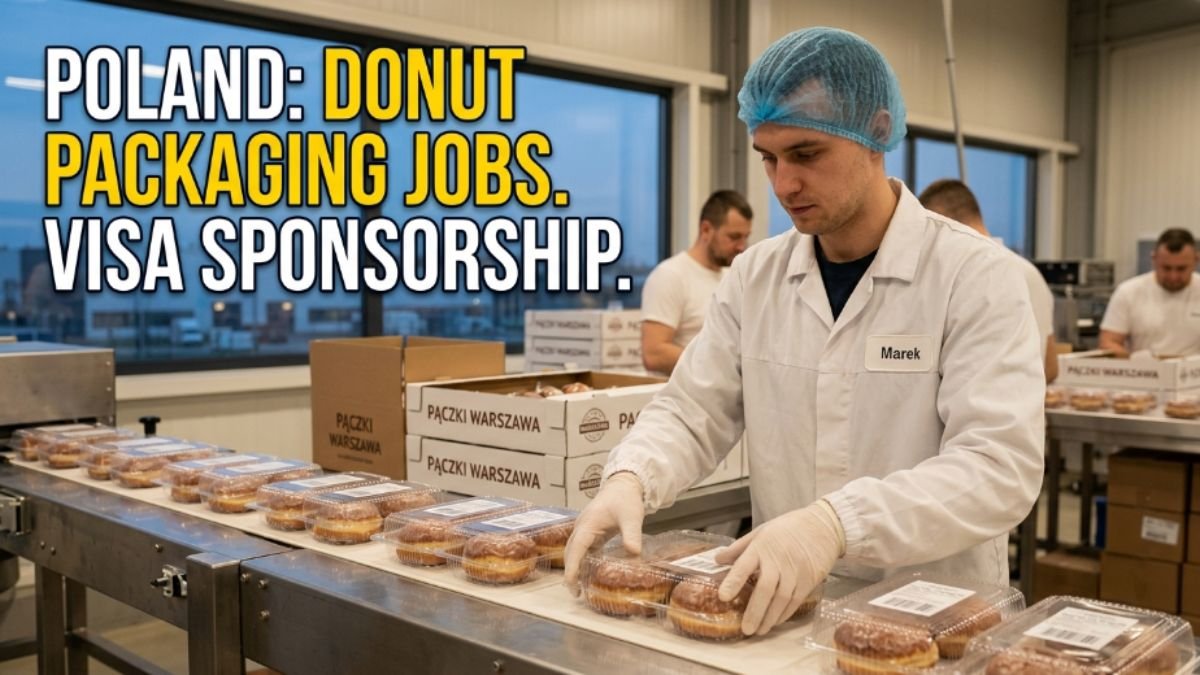
Poland has become one of the most active destinations for foreign workers in Central Europe. Its food manufacturing sector keeps expanding, and employers are actively looking for workers from outside the European Union. Donut packaging roles are among the positions open to international applicants, and some employers provide visa sponsorship to fill these vacancies. If you have no formal qualifications or previous factory experience, this can still be a realistic option for you.
What Donut Packaging Work Actually Involves
Donut packaging is a production-line role inside a bakery or confectionery factory. The work is physical, repetitive, and carried out in a clean, temperature-controlled environment. Most tasks do not require any prior training, and employers usually provide on-the-job instruction on your first few days.

Common daily tasks include:
- Placing donuts into boxes, trays, or plastic containers by hand or using basic equipment
- Applying labels and checking that packaging matches the correct product
- Inspecting items for damage or quality issues before sealing
- Stacking finished packages onto pallets or conveyor belts
- Cleaning your work station and following food hygiene rules
- Recording production counts or reporting problems to a supervisor
Shift work is standard in most Polish factories. This means you may work mornings, afternoons, or nights, and shifts typically run 8 hours. Overtime is often available and paid at a higher rate.
Who Can Apply
These jobs are genuinely accessible to unskilled and less-skilled workers. Employers recruiting internationally generally look for the following:
- Age 18 or above
- Physical fitness, as the role involves standing for long hours and repetitive hand movements
- Basic ability to follow written or verbal instructions
- A clean criminal record
- Willingness to work shifts, including nights and weekends
- No formal education requirement in most cases
Some employers prefer candidates with any previous factory, warehouse, or food-handling experience, but this is not always required. A positive attitude and reliability matter more than a CV for these types of roles.

Salary and Pay Rates in Poland
Poland updated its national minimum wage on 1 January, and the current statutory minimum is PLN 4,806 gross per month, with a minimum hourly rate of PLN 31.40 gross. Most donut packaging and food production roles pay at or slightly above this floor. Some larger employers offer higher wages to attract workers.
The table below gives a general picture of what packaging and food factory workers earn in Poland:
| Role Level | Monthly Gross Pay (PLN) | Approximate USD Equivalent |
|---|---|---|
| Entry-level packager | PLN 4,806 – PLN 5,500 | USD 1,200 – USD 1,370 |
| Experienced line worker | PLN 5,500 – PLN 6,500 | USD 1,370 – USD 1,620 |
| Night shift / overtime included | PLN 6,000 – PLN 7,000 | USD 1,490 – USD 1,740 |
Night shift allowances, attendance bonuses, and overtime pay can raise your monthly earnings meaningfully. Some employers also provide free or subsidised accommodation, which reduces your living costs further.
How Visa Sponsorship Works in Poland
For non-EU nationals, working legally in Poland requires a work permit. The employer is responsible for starting this process. Understanding the steps helps you know what to expect.
Here is how the process typically works:
- Receive a job offer from a registered Polish employer who agrees to sponsor your permit
- The employer applies for a Type A Work Permit on your behalf at the regional Voivodeship Office (Urząd Wojewódzki)
- Processing time is approximately 3 months, though this varies by region
- Once the permit is approved, you apply for a D-type National Work Visa at the Polish embassy or consulate in your home country
- You travel to Poland and begin work under your employment contract
- After arrival, you may need a medical fitness check and must register your address with local authorities
An important recent change: as of 2025, the labour market test that previously required employers to prove no suitable local candidate was available has been eliminated. This simplifies and speeds up the hiring process for foreign workers.
All work permit applications are now submitted through the online portal at Praca.gov.pl. Your employer handles this, but it is useful to know the process exists.
What Sponsoring Employers Are Responsible For
When a Polish employer agrees to sponsor your visa, they take on specific responsibilities under Polish labour law. These include:
- Submitting the work permit application and covering associated fees (typically PLN 300–500)
- Providing you with a valid employment contract before your visa application
- Ensuring your wages meet the national minimum wage
- Complying with Polish labour law regarding working hours, rest periods, and safety
Some employers also provide accommodation support, free work uniforms, and transport to and from the factory. These benefits vary by employer, so clarify what is included before you accept an offer.
Where to Find These Jobs
Several reliable channels exist for finding donut packaging and food factory roles in Poland with visa sponsorship:
- Pracuj.pl – Poland’s largest job platform, with listings in Polish and sometimes English
- Praca.pl – Another major Polish jobs board covering factory and production roles
- LinkedIn – Increasingly used by Polish employers to reach international candidates
- Global Work Connections – An agency specialising in verified visa-sponsored factory roles in Poland
- Seasonal work visa platforms – Several websites publish verified confectionery and food production vacancies with sponsorship details
When applying, focus on employers in cities with large food manufacturing hubs. Krakow, Warsaw, Wroclaw, Poznan, and Lodz all have established confectionery and bakery operations.
Documents You Will Typically Need
Having your documents ready speeds up the application considerably. Most employers and Voivodeship offices require:
- A valid passport (must remain valid throughout the permit period)
- A signed employment contract or letter of intent from the employer
- A completed work permit application form (submitted by the employer online)
- Proof of clean criminal record from your home country
- Medical fitness certificate (sometimes required on arrival rather than before)
- Sworn translations of non-Polish documents into Polish
Check with your specific employer, as requirements can vary slightly depending on your nationality and the regional Voivodeship Office handling the application.
Practical Things to Know Before You Go
Poland offers a reasonable standard of living for factory workers, particularly in smaller cities where rent and food costs are lower than in Western Europe. Public transport is affordable and widely available in most cities.
A few practical points worth knowing:
- Polish is the working language in most factories; learning basic vocabulary helps you settle in faster
- Health insurance is included through the social contributions deducted from your salary
- The Polish złoty (PLN) is the currency; banking and money transfers are straightforward
- Poland is a member of the European Union, meaning your work experience there carries weight if you later seek opportunities in other EU countries
Donut packaging jobs are a solid entry point into the Polish labour market. The work is accessible, the pay is reliable, and the visa process, while requiring patience, is manageable when your employer is guiding it. If you are looking for stable employment in Europe and willing to put in the effort, this is a pathway worth pursuing.