Production Operators Jobs in New Zealand with Visa Sponsorship 2026
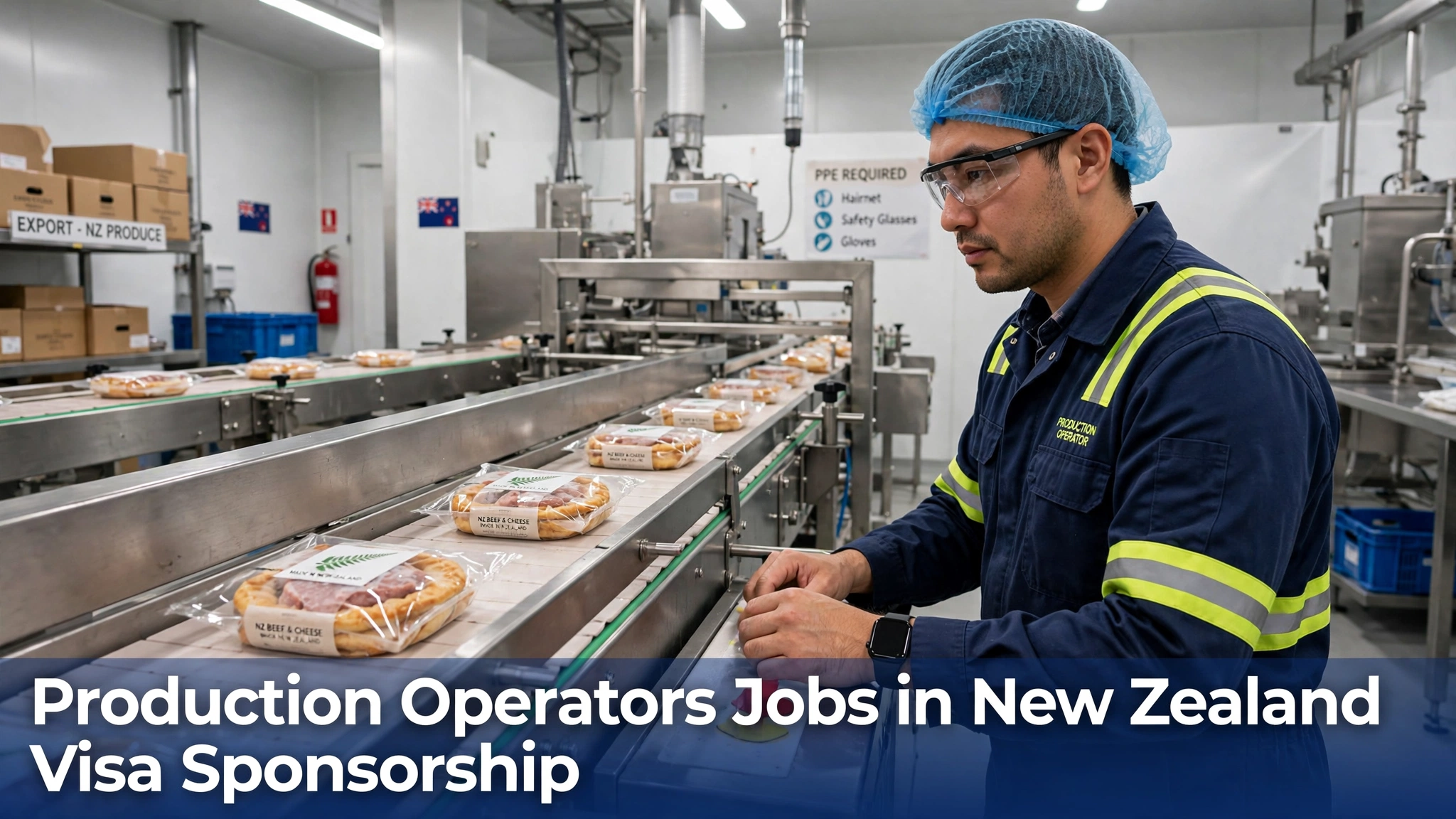
Production operator jobs in New Zealand are factory and plant jobs in food production, dairy plants, plastics, packaging, glass and general manufacturing. A production operator runs machines, checks product quality and keeps the line moving.
The same work is also advertised as machine operator, process worker, process operator or factory worker. The role is practical and suitable for unskilled or less skilled workers who are fit and ready for shift work.

Visa sponsorship is not automatic, so every foreign applicant must first check if the employer can legally hire a migrant worker.
Main Duties of a Production Operator
Daily work changes by factory, but the main duties are machine work, quality checks and safe production.
- Set up and operate production machines and equipment
- Load raw material and keep the line supplied
- Check finished products for size, weight, packing and defects
- Record production numbers and complete simple paperwork
- Report machine faults or safety problems to the team leader
- Keep the work area clean and follow hygiene rules in food plants
- Pack, label and stack finished products for dispatch
Most factories run day, afternoon and night shifts, often with weekend work.
Types of Production Operator Jobs
- Food and bakery production, including mixing, baking lines and packing
- Dairy plant work, including blending, canning and packing operations
- Plastics and packaging manufacturing
- Glass, building product and general factory production
Many adverts are full time with guaranteed hours, and some casual roles also appear. Training is often given on the job, but factory experience is a clear advantage.

Simple Pay Overview for Production Operators
Pay depends on the industry, shift pattern and experience. New Zealand salary guides show an average base pay of about NZD 25 to NZD 27 per hour for this role. The legal adult minimum wage is NZD 23.95 per hour, and night or rotating shifts can add extra allowances in some plants.
| Job Type | Pay Example Seen in Adverts | Main Note |
|---|---|---|
| Food production operator | NZD 25 to NZD 28 per hour | Food processing line work, for example in Waikato |
| General production operator | Starting rate NZD 28.70 per hour | Manufacturing role with structured training |
| Process operator | NZD 30.95 per hour plus allowances | Rotating 12-hour shifts in a packaging plant |
| Production operator, Otago | NZD 26 to NZD 32 per hour | Factory role advertised in Alexandra |
These figures are examples from real adverts and pay guides, not a promise. Always check the exact rate and hours in the written employment agreement before you accept a job.
Basic Requirements for Applicants
This job does not need a degree, but employers check fitness, safety habits and attitude with care.
- Physical fitness for standing long hours and lifting, often up to 25 kg
- Basic English for safety instructions, records and team communication
- Factory, warehouse, food processing or machine experience if available
- Ability to work day, afternoon or night shifts, including weekends if needed
- Clean record and ability to pass a police check
- Careful work style, good attention to quality and no shortcuts on safety
- Forklift licence for some roles where moving stock is part of the job
Fresh workers can start in trainee or casual roles in some plants, but most full-time adverts prefer factory experience. Do not show false experience.
Visa Sponsorship Position for Production Operator Jobs
Visa sponsorship for a production operator is possible only through the correct legal route. Many factory adverts ask for workers who already have the right to work in New Zealand, and such adverts cannot sponsor a foreign worker.
The main route is the Accredited Employer Work Visa, called AEWV. The employer must be accredited by Immigration New Zealand, and the exact job must pass a Job Check before the worker can apply. The job offer must be full time, for at least 30 hours a week, and pay must be at least the market rate for that job and not below the minimum wage.
Check these points before you trust any sponsorship claim.
- The employer is accredited and the job has an approved Job Check
- The job title, duties and location match the real factory role
- The hourly rate and guaranteed hours are written in the offer
- The visa type, normally AEWV, is clearly stated
- No fee is demanded for a guaranteed job or visa
For lower-skilled roles, the worker must also meet skill and English requirements and pass health and character checks. If the employer is not accredited, or there is no approved Job Check, there is no legal sponsorship for that job.
Work Conditions and Benefits
Most roles are full time, with many adverts showing 40 or more hours per week. Some plants use rotating 12-hour shifts, while others use fixed day or night shifts. Common benefits in adverts include paid training, protective gear and staff discounts. Holiday pay, sick leave and KiwiSaver apply as per New Zealand law.
How to Apply for Production Operator Jobs in New Zealand
- Search trusted New Zealand job sites with the words production operator, machine operator or process worker.
- Read the work rights line first, and note if the advert accepts foreign applicants.
- Prepare a simple CV with factory experience, machine skills, shift availability and references.
- Write two clear lines about machines or production lines you have worked on, if any.
- Apply online through the job site or employer link in the advert, and keep a copy.
- Complete police, health and reference checks if the employer asks.
- Confirm the employer’s accreditation, Job Check, pay rate and hours in writing before you sign.
Production operator jobs in New Zealand can give a less skilled worker steady factory income and real machine skills. For foreign applicants, the safe route is an accredited employer, an approved Job Check and the correct visa process.